

This month, the U.S. Environmental Protection Agency (EPA) posted documents confirming that the agency has granted Google LLC’s application to register their “Debug quinx males” (DQB Males) mosquitoes with the EPA under Section 3 of the Federal Insecticide, Fungicide, and Rodenticide Act (FIFRA). As Hawai‘i Unites reported last year, the EPA docket documents describe the mosquitoes as specifically targeted for use in the Hawaiian Islands for bird “conservation” programs. These experimental southern house mosquitoes lab-infected with Wolbachia bacteria pose serious risks that have not been addressed. We’ve been sounding the alarm about the planned expansion of the use of this unstudied biopesticide:
“If this registration is allowed to move forward, it won’t be long before the biotech industry starts pushing these mosquitoes for conservation use throughout the country and worldwide and pushing for their use to control mosquitoes in the name of public health.”
Google’s Section 3 approval now moves the needle quickly towards release of this product in additional states and export of the mosquitoes to other countries. Shortly after posting the Section 3 decision for Hawai‘i, the EPA posted Google’s Application for “Experimental Use Permit for Wolbachia pipientis wAlbB Contained in Live Adult Culex quinquefasciatus Male Mosquitoes (DQB Strain)” stating that the goal “is to collect field efficacy data that would be the basis for a Section 3 Commercial Use application.” According to the EPA notice, the Experimental Use Permit (EUP) is for release of the mosquitoes in the states of California and Florida:
“Google LLC is proposing to use up to 14.080 mg of the active ingredient Wolbachia pipientis wAlbB Contained in Live Adult Culex quinquefasciatus Male Mosquitoes (DQB Strain) for two years in California and Florida. In Florida, up to 16,000,000 DQB Male Mosquitoes are proposed to be released in year 1, and up to 16,000,000 released in year 2. In California, up to 16,000,000 are proposed to be released in year 1, and up to 16,000,000 released in year 2. Proposed testing will include the states of California and Florida to generate data to support a Section 3 product registration application under FIFRA.”
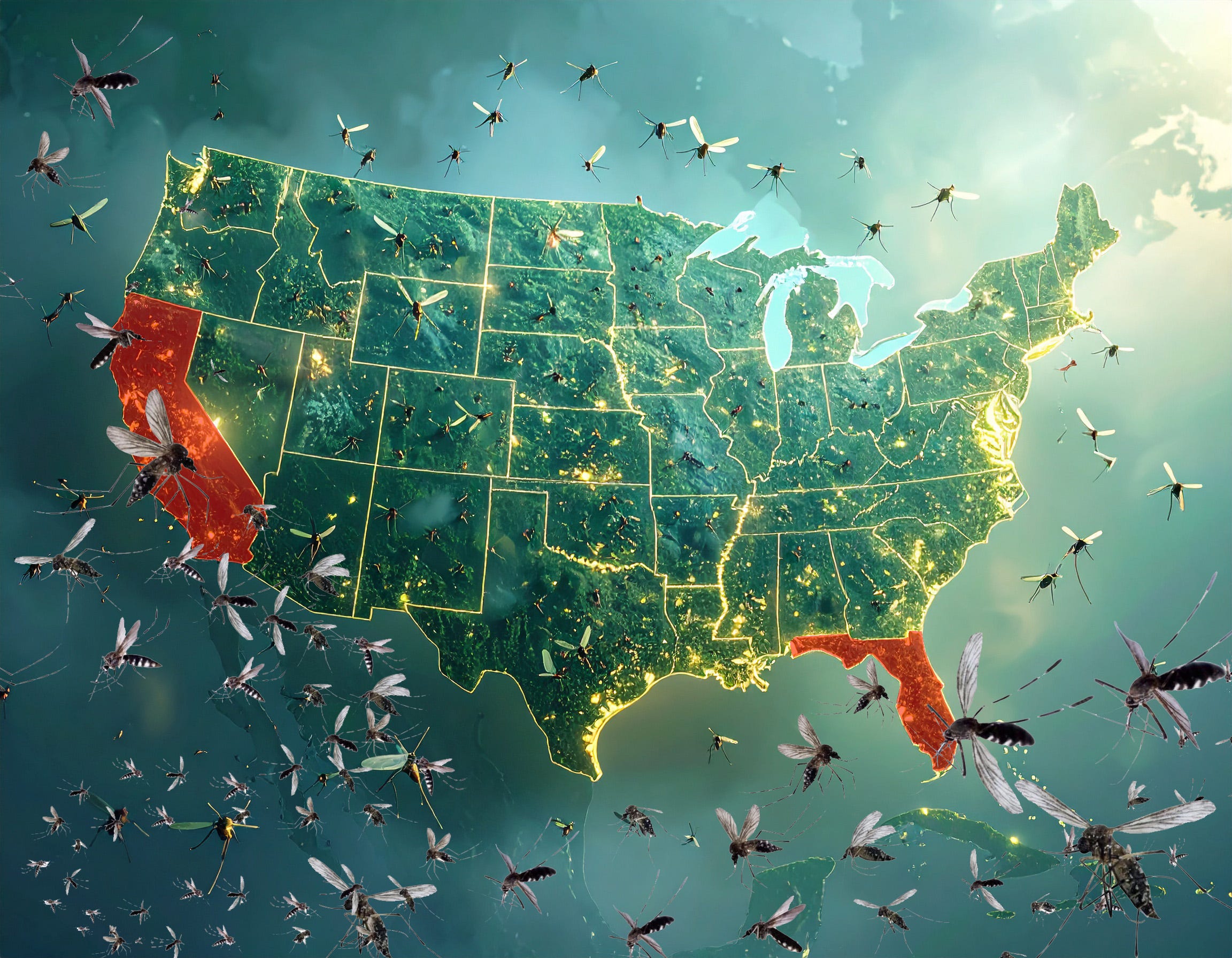
The deadline to comment in opposition to Google’s application for California and Florida EUP for these experimental mosquitoes is Friday, June 5, 2026, at 5:59pm Hawai‘i Standard Time.
Send comments here:
COMMENT on Google’s Mosquito Experimental Use Permit Application for California and Florida
The most effective way to comment will be in your own words. Please include a clear statement of your concerns, such as:
“I’m opposed to Google’s Application for Experimental Use Permit for release of DQB Strain mosquitoes in California and Florida. Risks of these mosquitoes have not been sufficiently studied, and the bacteria-infected mosquitoes could have harmful impacts to the health of people, animals, and the environment.”
Hawai‘i Unites submitted a comment to the EPA opposing Google’s EUP application and detailing serious risks and concerns about the lack of study of these experimental mosquitoes. All information included in our comment is documented and can be referenced in your own comment.

In our comment on the EUP application for California and Florida, we addressed the EPA’s “response” to comments received in opposition to Google’s Section 3 registration request for Hawai‘i, noting the EPA’s failure to address commenters’ concerns and the concerns of tropical disease and vector expert Dr. Lorrin Pang.
“Despite receiving a majority of comments opposing registration, the EPA failed to honor its mission to protect human health and the environment. Instead, the EPA chose to protect the financial interests of Google LLC by approving a Section 3 registration that allows for the continued exploitation of the Hawaiian Islands as testing grounds for a biotech product with no proven safety or efficacy data and the potential for disastrous consequences for our health and environment.”
“The ‘EPA Response to Comments in Section 4.A.1’ does not address the human diseases in question, instead stating that ‘Google has specific quality control procedures integrated into the manufacturing process of the DQB Males’ and that ‘these details have been claimed as confidential business information.’ We hereby demand a response to the question of whether or not these mosquitoes are being screened for West Nile virus, elephantiasis, encephalitis, and Zika virus. We further demand that the full pathogen screening process be publicly documented. Mosquitoes are disease vectors, and it is entirely unacceptable that this information is being withheld from the public. As stated in our comment, male mosquitoes transmit bacteria and pathogens to females. Not only are biting females being accidentally released, but the intentionally released males can pass pathogens to wild females. The EPA has failed to address this topic entirely.”
“The ‘EPA Response to Comments in Section 4.A.2’ proposes that studies referenced by commenters ‘are not relevant to DQB Males as they concern both different mosquito species and pathogens.’ In this same document, the EPA repeatedly references studies of Aedes species mosquitoes to justify approval of the DQB Males Culex product. Clearly a study showing increased disease transmitting capability of West Nile virus in Culex mosquitoes (‘Wolbachia Enhances West Nile Virus (WNV) Infection in the Mosquito Culex tarsalis’ – Dodson et al., 2014) is relevant. The EPA then goes on to say, ‘there is no current published study showing evidence of enhanced pathogen infection in Cx. quinquefasciatus transfected with Wolbachia, wAlbB strain, which is the mosquitoWolbachia [sp] combination of DQB Males.’ The entire point of our concern about the Dodson study is that there is no study to determine whether or not wAlbB strain Wolbachia bacteria in Culex quinquefasciatus causes increased capability to transmit West Nile Virus to birds and/or humans. The EPA’s failure to address the possibility of increased WNV transmission is staggering.”
“The ‘EPA Response to Comments in Section 4.A.3.i’ confirms the ‘competing interests’ of the Kilpatrick et al. (2024) study, then concludes that ‘any suggestion that Google manipulated their study or the peer-review process is ill-founded.’ Failure to address this blatant conflict of interest is negligence on the part of the EPA. Where are the unbiased studies of this crucial issue of whether or not these mosquitoes have the potential to cause increased pathogen infection and disease-transmitting capability?”
“Where are the studies of the effects of wild mosquitoes becoming infected with multiple strains of Wolbachia? Where are the studies of the effects of these combined strains on disease transmitting capability in mosquitoes?”
“As we have repeatedly stated, studies have not been done on the potential significant impacts of this species of mosquito infected with this strain of bacteria, including impacts to disease transmissibility. There is no way for this open-air experiment to be self-contained. How can the EPA assert that no hazards have been identified when potential serious hazards have not been studied? As a regulatory agency, the EPA cannot present an appeal to ignorance as justification for allowing an unstudied experimental product to be released into our environment.”
“The ‘EPA Response to Comments in Section 4.B.1’ confirms that EPA guidelines allow for ‘a contamination rate of 1 female per 250,000 males.’ The ever-changing ‘expected’ contamination rate provided by the manufacturer is not relevant to the existing regulatory parameters. The bottom line is that the EPA allows for the release of one female for every 250,000 males. Hawai‘i Unites’ calculations are accurate, and it is a falsehood for the EPA to state that ‘the commenters substantially overestimate the number of wAlbB-infected females that could potentially be released in Hawaii.’ The calculations are not an estimate. They are mathematical calculations using the exact figures stated in the regulatory documents for these mosquito releases. Based on the parameters approved in these documents, the number of females that ‘could potentially be released’ on Maui alone equals 3,103 females weekly.”
“The ‘EPA Response to Comments in Section 4.B.2’ dismisses the potential for increased disease transmissibility while at the same time acknowledging ‘uncertainty related to the potential indirect hazard of disease transmission should establishment of the wAlbB strain occur, as Wolbachia infection in mosquitoes has the potential to impact disease transmission capabilities (Bourtzis et al., 2014; Dutra et al., 2016) with different effects on transmission found with various Wolbachia strain/mosquito species/pathogen combinations;…’ The fact that the EPA has not required studies of specific human diseases that this mosquito species transmits is indefensible. If the wild mosquito population is replaced by lab-strain-infected mosquitoes that are more capable of transmitting human disease such as West Nile virus, the outcome could be catastrophic. Further, the EPA’s statement that ‘the potential establishment of the wAlbB strain would not impact transmission rates of avian malaria in Hawaii’ is not backed by unbiased study.”
“The ‘EPA Response to Comments in Section 4.B.4’ states that the ‘EPA found that there is a negligible likelihood of horizontal transmission of wAlbB (i.e., movement of wAlbB to another species)…’ This conclusion again fails to address Dr. Pang’s detailed concerns regarding non-sexual horizontal transmission, venereal horizontal transmission, and increase in horizontal transmission when vertical transmission is suppressed.”
“In summary, the EPA’s ‘response’ is to document their pathway towards dodging responsibility as the regulatory agency tasked with protecting our health and environment. Further, the EPA does not address commenter Donna Thompson’s statement: ‘The Maui and Kauai Environmental Assessments assertion that released mosquitoes pose no risk to human health is based on unsound science.’ The following information included in Thompson’s full comment has never been addressed by the EPA: ‘The 2010 article by Popovici et al. cited in the Environmental Assessment has been discredited by the EPA. The EPA Human Studies Review Board met in 2018… “The Board concluded that the research described in the article by Popovici et al. was not scientifically sound and does not provide reliable data to contribute to a weight of evidence determination for assessment of human health risks due to release of Wolbachia-infected mosquitoes.”’ The EPA continues to reference a study discredited by the EPA.”
“The ‘EPA Response to Comments in Section 4.C.5’ confirms that the ‘EPA does not routinely require the submission of or the assessment of efficacy data for non-public health pesticides.’ Are we to assume that the EPA does not require safety data either? Per our comment, the public has seen no data on the results of these mosquito releases. The entire premise of these projects is that the experimental mosquitoes are needed as a conservation tool. We are now in the third year of these mosquito releases, and the agencies involved have not shown the product to be effective, necessary, or safe.”
“Managing agencies are already deviating from their stated plan by releasing mosquitoes solely by helicopters rather than by drones for several months longer than was approved. The approved longline release system is not even the method being used, and the helicopters appear to be flying closer to the tree canopy. These deviations increase the potential for significant impacts, including disturbances to breeding and nesting of endangered forest birds, helicopter accidents and collisions, and wildland fires. The EPA’s lack of concern for the potential significant impacts of the mosquito release system required for use of this product is unacceptable.”
“The ‘EPA Response to Comments in Section 4.D.3’ shockingly makes clear that not only does the EPA have no intention of addressing Dr. Pang’s concerns about wind drift, but that they have ‘included the entire state of Hawaii in the action area (the area included in the evaluation)…’ and that as ‘Hawaii is a geographically isolated island chain, there is a negligible likelihood that DQB Males would leave the action area.’ In other words, the EPA allows for experimental mosquitoes released in any area on any island to drift on the wind to any unintended area throughout the entire island chain. The EPA then concludes ‘that there are no risks of concern associated with the release of DQB Males to human health and the environment in the action area (i.e., the entire state of Hawaii).’ No studies have been done to back this conclusion.”
“Biological larvicide controls were dismissed as an alternative mosquito control action in the Environmental Assessments (Maui EA and Kaua‘i EA) for the DQB Males mosquito releases, Bti larvicide use is a deviation from the approved plans, and no detailed analysis of Bti larvicide has been completed…The EPA does not address the lack of study of potential significant impacts of use of these combined products (DQB Males and Bti) in the project areas. The EPA also does not address the critical issue of data falsification.”
“Are we now to assume that the EPA has not reviewed nor considered the Environmental Assessments for these mosquito releases on Maui and Kaua‘i? Under the Federal Insecticide, Fungicide, and Rodenticide Act (FIFRA), the EPA is legally required to ensure that biopesticides undergoing Section 3 registration do not cause ‘unreasonable adverse effects on the environment.’ This necessitates that the EPA continually assess the actual, real-world environmental impacts and risks of a biopesticide. If there are significant deviations from the parameters outlined in a prior Environmental Assessment, the EPA is required to consider new information, reevaluate risk, and require new data. The EPA has again failed to comply with their own regulatory processes.”
“Contrary to the EPA’s statement, not only did our comment link to the Kaua‘i EA, but our full comment included this exact statement from the Kaua‘i EA: ‘Monitoring of birds is beyond the scope of this EA.’ The specific paragraph referenced in the Kaua‘i EA concludes, ‘Monitoring the response of forests bird to mosquito suppression via the Incompatible Insect Technique (IIT) mosquito control is outside the scope of the proposed action of this EA.’ Is the EPA intentionally misrepresenting the facts here? The agencies releasing these lab-altered mosquitoes have admitted that the plan does not include monitoring the effects of the experimental mosquitoes on forest birds. Their approved plans do not require monitoring the effects (efficacy or safety) on the birds. The premise of this entire product registration request is that it is a bird conservation tool. The truth is that these mosquito releases could cause the extinction of forest birds. It is a travesty that the EPA is complicit in allowing these programs to move forward.”
“The EPA has never followed up on this concern or requested additional information, and the agency’s lack of interest in potential misconduct further illustrates that the EPA does not appear to be working to protect the health of people or the environment. Hawai‘i Unites again asserts that mosquito release agencies have suppressed information regarding concerns of scientists working for agencies involved in the mosquito releases on Maui and Kaua‘i…Additionally, as stated in our court documents, ‘The hiding of the identities of the commenters is not a mere “irregularity in procedure” but instead was a major error of law because it does not permit “informed decision making by the agency.” One need not take too large an intellectual leap to imagine how these comments might impact the Board’s decision-making if the DLNR’s own scientists or other scientists who work for a Birds Not Mosquitoes project partner wrote comments critical of the proposed action. For example, wouldn’t the BLNR pay special attention to comments from authors of some of the papers the applicant cited in the FEA? One might imagine a hypothetical situation where the applicant asked skeptics in their own ranks to submit comments on the EA to them directly (and not in the public-facing document) out of a concern that they might reveal the doubts of members of the project team. The concealment of the identities of the commenters also hindered informed decision making by the board.’ The court ruled in our favor that the ‘DLNR’s final environmental assessment did not comply with Hawaii Administrative Rules (HAR) § 11-200.1-20(d) (2019).’ The court remanded ‘for the Environmental Court to order that DLNR amend the final environmental assessment to comply with HAR § 11-200.1-20(d).’ The DLNR has yet to comply with this court order.”
“On the contrary, the EPA is well aware of Hawai‘i Unites’ FOIA request to the EPA, EPA-2023-004239, requesting the Data Evaluation Record (DER), including confidential attachment, for Docket ID EPA-HQ-OPP-2022-0896 ‘DQB males (Wolbachia pipientis, DQB strain); Receipt of Application for Emergency Exemption.’ This document describes the manufacturing process, including pathogen screenings (and/or lack thereof). The EPA’s determination letter for Hawai‘i Unites’ FOIA EPA-2023-004239 states that the ‘request was initially denied, in part, because a portion of the responsive record was preliminarily determined to be exempt from disclosure under Exemption 4 (confidential business information (“CBI”)) of the FOIA. 5 U.S.C. § 552(b)(4)’ and that ‘the Office of General Counsel issued a final confidentiality determination and found that a portion of the information initially withheld pursuant to Exemption 4 is entitled to confidential treatment and will continue to be withheld.’…Again, we demand that the EPA disclose the full pathogen screening process for these bacteria-infected mosquitoes.”
“In conclusion, the EPA clearly has not done a thorough evaluation of the risks and potential significant impacts of DQB Males mosquitoes. Hawai‘i Unites’ comment on EPA Docket ID EPA-HQ-OPP-2024-0428 was not adequately addressed, several concerns stated in our comment were not addressed at all, the concerns of the 267 additional commenters opposed to the issuance of registration were not adequately addressed, and most of these commenters’ concerns were not addressed at all. The EPA Docket ID EPA-HQ-OPP-2024-0428 Section 3 Registration request never should have been approved, and the EPA Docket ID EPA-HQ-OPP-2025-3951 Experimental Use Permit application cannot be approved under these circumstances. Hawai‘i Unites implores the EPA to honor its mission to protect human health and the environment by putting a stop to this dangerous open-air biotech experimentation.”
As Google LLC continues to escalate their biotech experiment agenda in Hawai‘i with plans in place to expand to the mainland and beyond, it’s more important than ever that we work together globally to document our opposition and make our voices heard. Please take the time to comment on Google’s Mosquito Experimental Use Permit for California and Florida before the June 5, 2026, deadline.
As Hawai‘i Unites previously reported, the State of Hawai‘i Department of Health (HDOH) intends to expand their multi-agency mosquito release programs in Hawai’i to all of the islands, releasing three species of lab-altered mosquitoes and escalating the narrative from bird conservation to public health. If this plan moves forward, invasive lab mosquitoes would be released directly in our neighborhoods.
The EPA Section 3 registration of Google’s DQB Strain mosquitoes for “conservation” use in Hawai‘i sets the stage for the HDOH’s planned statewide proposal.
Dr. Kenneth Fink is the Director of Health for the State of Hawai‘i Department of Health. In February, Hawai‘i Unites sent a letter to Dr. Fink documenting our concerns and asking important questions from the community. We are still waiting for a response. Per our letter, the HDOH’s mosquito release partners have stated their intention to continue expanding the mosquito release programs “to include ‘next-generation tools’ such as mosquito gene drives and precision-guided Sterile Insect Technique (pgSIT) CRISPR gene-edited mosquitoes, along with the production of mosquitoes in the DLNR’s Hawai‘i lab and release of mosquitoes on the islands ‘into perpetuity’ (forever).” The HDOH has not answered our question about where they stand on these goals.
As the lead agency for these mosquito releases, the HDOH needs to hear directly from all of us that we are strongly opposed to this dangerous agenda. Please continue to contact Dr. Fink by phone and email to let him know that you don’t want any more of these mosquito releases in Hawai‘i.
Dr. Kenneth Fink
(808) 586-4410 ext.2
(leave a voicemail if prompted)
kenneth.fink@doh.hawaii.gov
Mahalo for speaking out to stop this biotech experimentation in our natural environment.
Aloha,
Tina Lia
Founder
Hawai‘i Unites
HawaiiUnites.org
Hawai‘i Unites is a 501(c)(3) nonprofit organization dedicated to the conservation and protection of our environment and natural resources. Your tax-deductible donations help us to fulfill our mission of honoring and protecting our sacred connection to the natural world.

Report a Mosquito Bite
The State of Hawai‘i and its multi-agency partnership Birds, Not Mosquitoes have been releasing bacteria-infected mosquitoes in East Maui and conducting pilot study releases on Kaua‘i since 2023. As part of our ongoing research and documentation, Hawai‘i Unites has been compiling reports from throughout the islands about unusual mosquito bite reactions. If you’ve been bitten by a mosquito and would like to report the incident, please complete our Mosquito Bite Incident Report.